
Specification
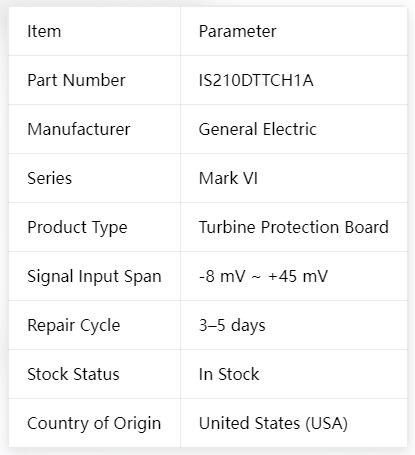

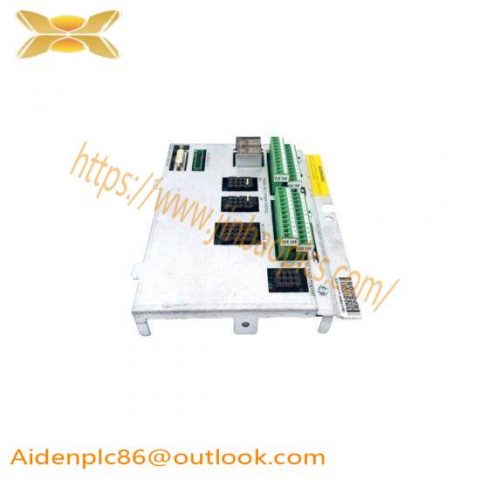
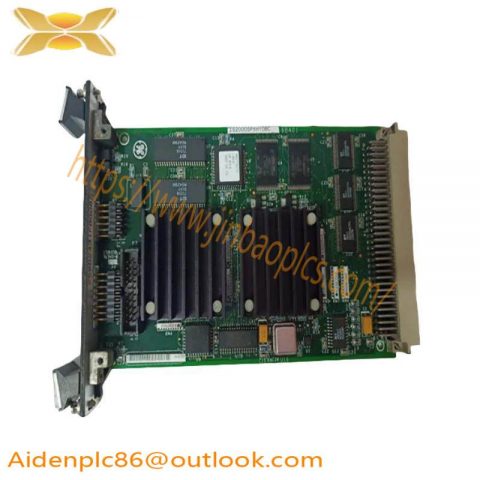
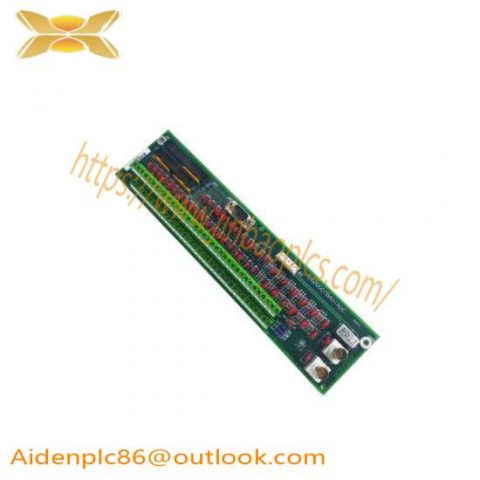
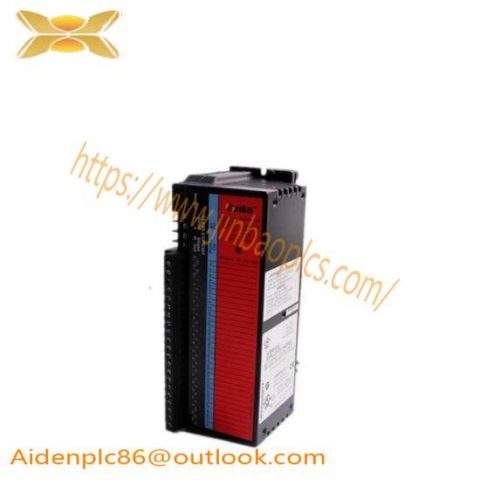
IS210DTTCH1A is a simplex thermocouple input board developed by General Electric. It is a part of Mark VI control system. The board is a compact terminal board primarily intended for DIN-rail mounting. It boasts 12 thermocouple inputs and establishes connection with the VTCC thermocouple processor board via a single 37-pin cable. Cable mirrors the one utilized by the larger terminal board. The signal conditioning and cold junction reference integrated onto the board align precisely with those featured on the TBTC board. Moreover, an onboard ID chip serves the crucial function of identifying the board to the VTCC, facilitating system diagnostic processes. 
Installation
Shield Screw Integration: Shield screws come pre-installed on the board, internally connected to SCOM (ground) for efficient grounding and shielding purposes. This setup simplifies the installation process by providing an integrated solution for grounding connections.
Mounting on DIN-Rail: The DTTC board is designed to seamlessly integrate into a plastic holder specifically tailored for mounting on DIN-rails. This mounting method offers stability and ease of access, making it convenient for installation in various industrial or control panel settings.
Wiring Thermocouples: Thermocouples are directly wired to the terminal block on the DTTC board. The Euro-Block type terminal block, featuring 42 terminals, is permanently affixed to the board, ensuring secure connections. Typically, #18 AWG wires are employed for this purpose, providing adequate conductivity and durability for thermocouple applications.
Grounding Connection: The terminal block includes two dedicated screws, labeled as 41 and 42, specifically designated for the SCOM (ground) connection. It’s essential to ensure that this grounding connection is established over the shortest distance possible to minimize potential interference and optimize signal integrity.
Operation
Thermocouple terminal board interfaces with the processor board, which houses the Analog-to-Digital (A/D) converter. The connection layout is elucidated in the provided figure for clarity and ease of reference.
The VTCC assumes the responsibility of furnishing excitation for the single cold junction (CJ) reference featured on the terminal board. This ensures stable and accurate temperature measurements by compensating for temperature differentials across the thermocouple circuit.
Connector JA1 serves as the conduit through which the 12 thermocouple signals, along with the CJ signal and the connection to the identity chip (ID), are routed. These signals are then transmitted via cabling to the VME control rack R, where further processing and analysis take place.
This operational configuration facilitates seamless communication between the thermocouple terminal board and the processor board, enabling the acquisition of precise temperature data essential for monitoring and controlling various industrial processes.
FREQUENTLY ASKED QUESTIONS
What is IS210DTTCH1A?
It is a turbine protection board developed by General Electrics.
How is the thermocouple terminal board connected to the processor board?
The connection between the thermocouple terminal board and the processor board, housing the A/D converter, is established according to a predefined layout. This layout is typically illustrated in a provided figure for reference during installation.
What role does the VTCC play in this setup?
The VTCC provides excitation specifically for the cold junction (CJ) reference present on the thermocouple terminal board. This excitation is crucial for ensuring accurate temperature measurements by compensating for temperature differentials across the thermocouple circuit.
What signals are transmitted through connector JA1?
Connector JA1 serves as the conduit for transmitting various signals between the thermocouple terminal board and the processor board. These signals include the 12 thermocouple signals, the CJ signal for cold junction compensation, and the connection to the identity chip (ID) for system diagnostic purposes.

There are no reviews yet.